Anzeige
Fauna Marin GmbH Tunze Aqua Medic BAS Kölle Zoo Aquaristik

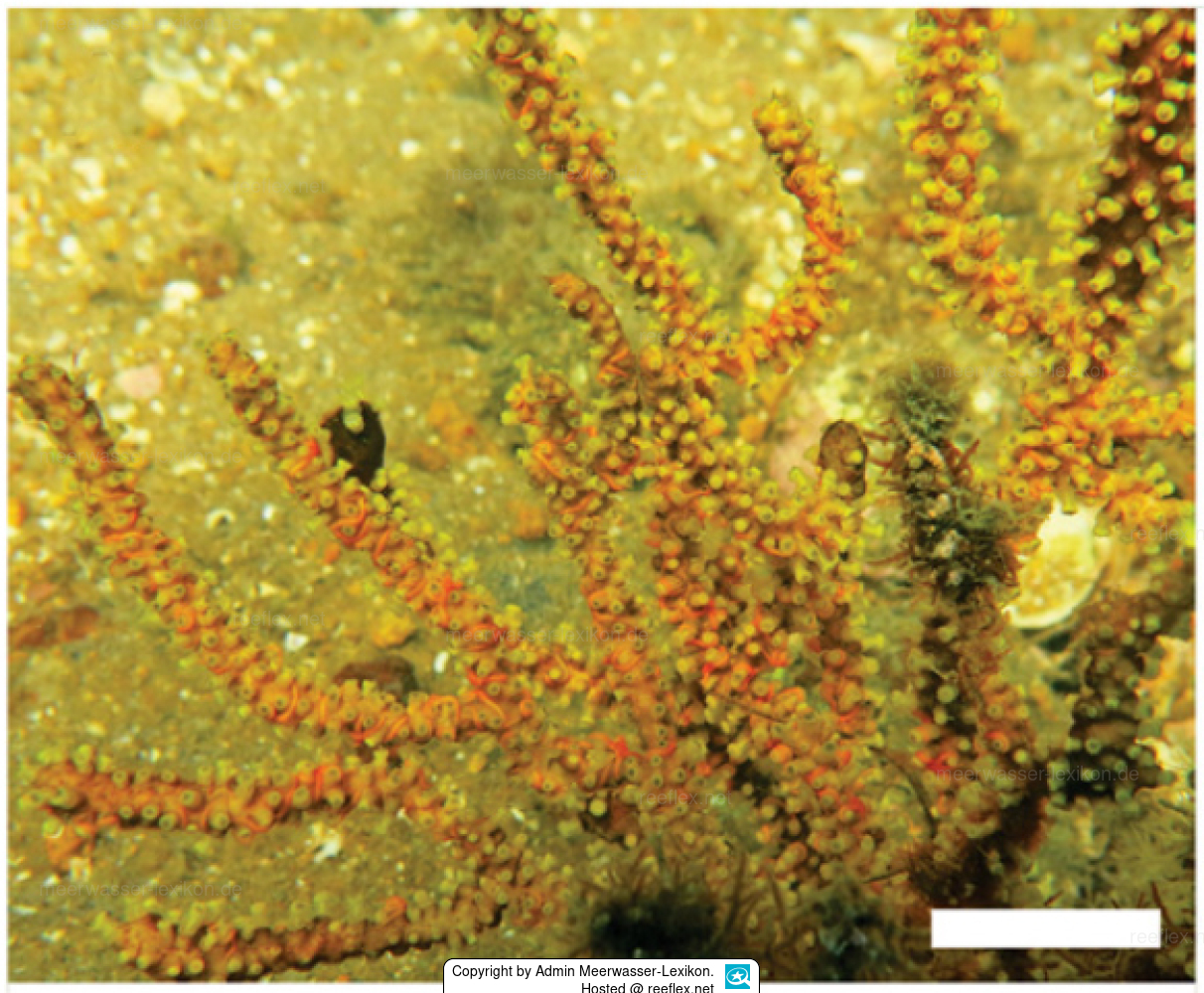
Heterogorgia uatumani Gorgonia

Heterogorgia uatumani is commonly referred to as Gorgonia. Difficulty in the aquarium: There are no reports available yet that this animal has already been kept in captivity successfully. Toxicity: Toxic hazard unknown.


Profilbild Urheber Admin Meerwasser-Lexikon

Mantelatto, M.C., Vidon, L.F., Silveira, R.B. et al. Host species of the non-indigenous brittle star Ophiothela mirabilis (Echinodermata: Ophiuroidea): an invasive generalist in Brazil?. Mar Biodivers Rec 9, 8 (2016). https://doi.org/10.1186/s41200-016-0013-x
Courtesy of the author Admin Meerwasser-Lexikon

Uploaded by AndiV.

Image detail


Profile

lexID:
13805 
AphiaID:
290110 
Scientific:
Heterogorgia uatumani 
German:
Goldene Strauchgorgonie 
English:
Gorgonia 
Category:
Горгонаприи (Морские Веера) 
Family tree:
Animalia (Kingdom) > Cnidaria (Phylum) > Anthozoa (Class) > Alcyonacea (Order) > Plexauridae (Family) > Heterogorgia (Genus) > uatumani (Species) 
Initial determination:
Castro, 1990 
Occurrence:
Brazil, Cuba, Honduras, the Caribbean, Venezuela, West-Atlantic Ocean 
Sea depth:
5 - 68 Meter 
Size:
10,5 cm 
Temperature:
°F - 80.6 °F (°C - 27°C) 
Food:
Amphipods, azooxanthellat, nonphotosynthetic, Bivalve larva, Carnivore, Copepods, Coral spawn, Crustacean larvae , Echinoderm larvae, Fish eggs, Invertebrates, Mucus, Plankton, Zooplankton 
Difficulty:
There are no reports available yet that this animal has already been kept in captivity successfully 
Offspring:
Not available as offspring 
Toxicity:
Toxic hazard unknown 
CITES:
Not evaluated 
Red List:
Not evaluated (NE) 
Related species at
Catalog of Life
:
 
Author:
Publisher:
Meerwasser-Lexikon.de
Created:
Last edit:
2021-04-20 17:05:15 

Info


Recommendation - the coral should be kept in a species-specific tank.

Feeding
The majority of gorgonians do not have zooxanthellae and do not live off light. Azooxanthellate gorgonians do not host symbiotic algae that produce nutrients and energy through photosynthesis.

The pumps should be switched off before feeding. In order for the gorgonian to survive in the aquarium, each individual polyp must be fed sufficiently, i.e. daily or 3-4 times a week. Without feeding, the gorgonian will not survive in the aquarium. The polyps need a certain amount of time to absorb the food (granules or dust food (Ultramarin, Cyclop Eeze) or frozen food (lobster eggs, mysis)). If shrimp and fish are present, they will try to steal the food, so it is essential to feed these cohabitants beforehand.

Newly introduced gorgonian sticks can be stimulated with a liquid food, e.g., PolypLab Polyp, to encourage the individual polyps to open. Only then can feeding be carried out.

The better the individual polyps take up the food provided, the better the growth and reproduction rates will be.

Azooxanthellate corals eat suspensions, marine snow, microplankton, and other organic matter, which is their natural food.

Source:
Mantelatto, M.C., Vidon, L.F., Silveira, R.B. et al.
Host species of the non-indigenous brittle star Ophiothela mirabilis (Echinodermata: Ophiuroidea): an invasive generalist in Brazil?.
Mar Biodivers Rec 9, 8 (2016). https://doi.org/10.1186/s41200-016-0013-x

Pictures

Commonly


Husbandry know-how of owners

0 husbandary tips from our users available
Show all and discuss