


 Scott & Jeanette Johnson, Kwajalein Unterwater

Info
Eurypatagus ovalis was originally brought to the surface from a depth of 192 metres in Philippine waters; the figure of 271.4 metres is provided by the Commonwealth Scientific and Industrial Research Organisation (CSIRO).
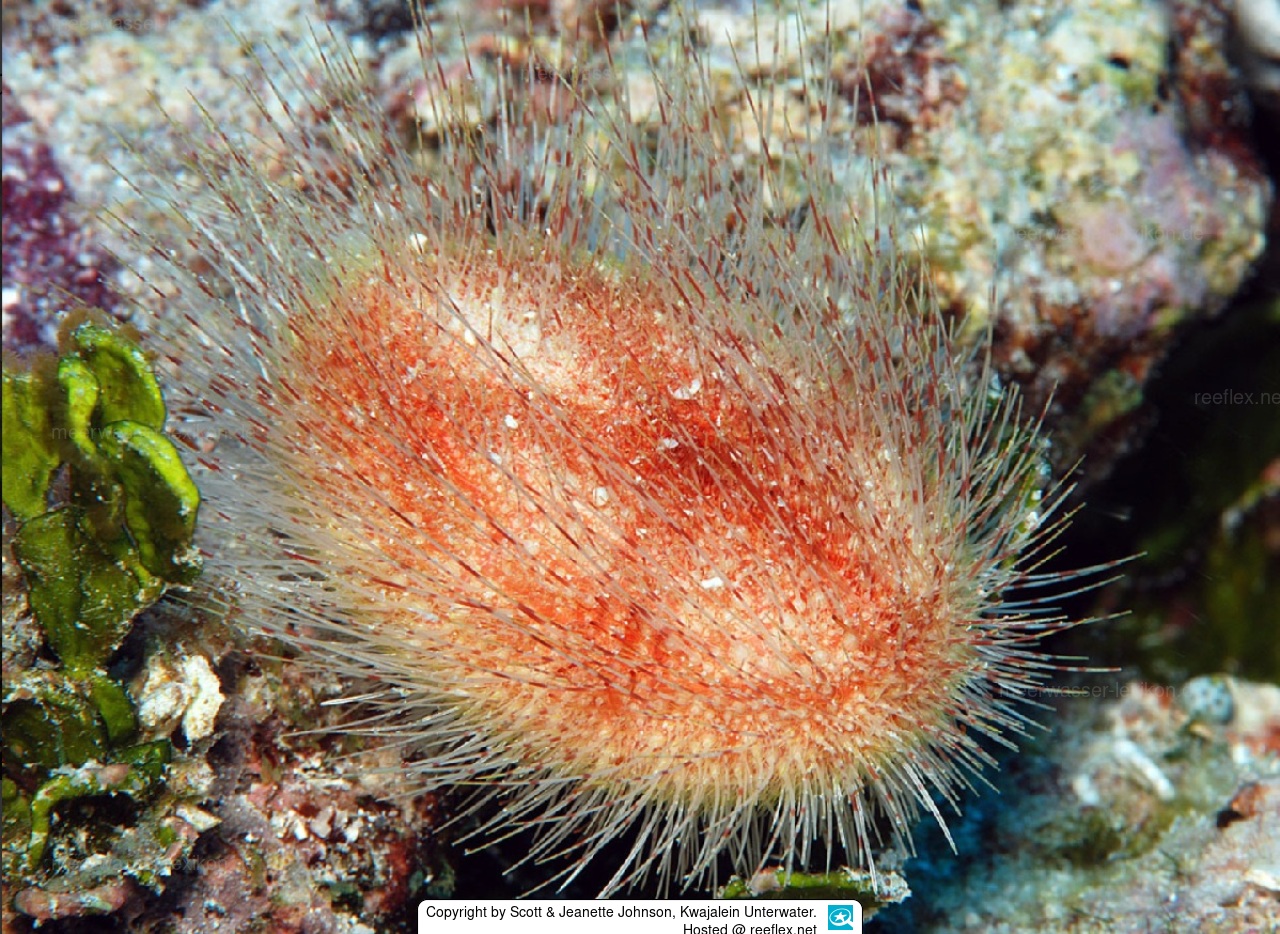
The sea urchin’s colouring is quite variable, as can be clearly seen in the photos.
Eurypatagus ovalis is a burrowing sea urchin; it creates a depression in the reef to hide from predators.
Sometimes a sea urchin grows larger than the burrow it has dug and gets stuck
Once trapped, the sea urchin can only feed on particles carried past by the current.
Anyone who has ever picked up a beached, dead sea urchin will quickly notice that it smells quite unpleasant, a clue to its English name.
As small as sea urchins may be, they are among the few animals capable of actively destroying their environment by dramatically altering kelp forests and leaving behind a vast, barren expanse known as ‘sea urchin wasteland’.
The sea urchin’s colouring is quite variable, as can be clearly seen in the photos.
Eurypatagus ovalis is a burrowing sea urchin; it creates a depression in the reef to hide from predators.
Sometimes a sea urchin grows larger than the burrow it has dug and gets stuck
Once trapped, the sea urchin can only feed on particles carried past by the current.
Anyone who has ever picked up a beached, dead sea urchin will quickly notice that it smells quite unpleasant, a clue to its English name.
As small as sea urchins may be, they are among the few animals capable of actively destroying their environment by dramatically altering kelp forests and leaving behind a vast, barren expanse known as ‘sea urchin wasteland’.


