


 ResearchGate


Info
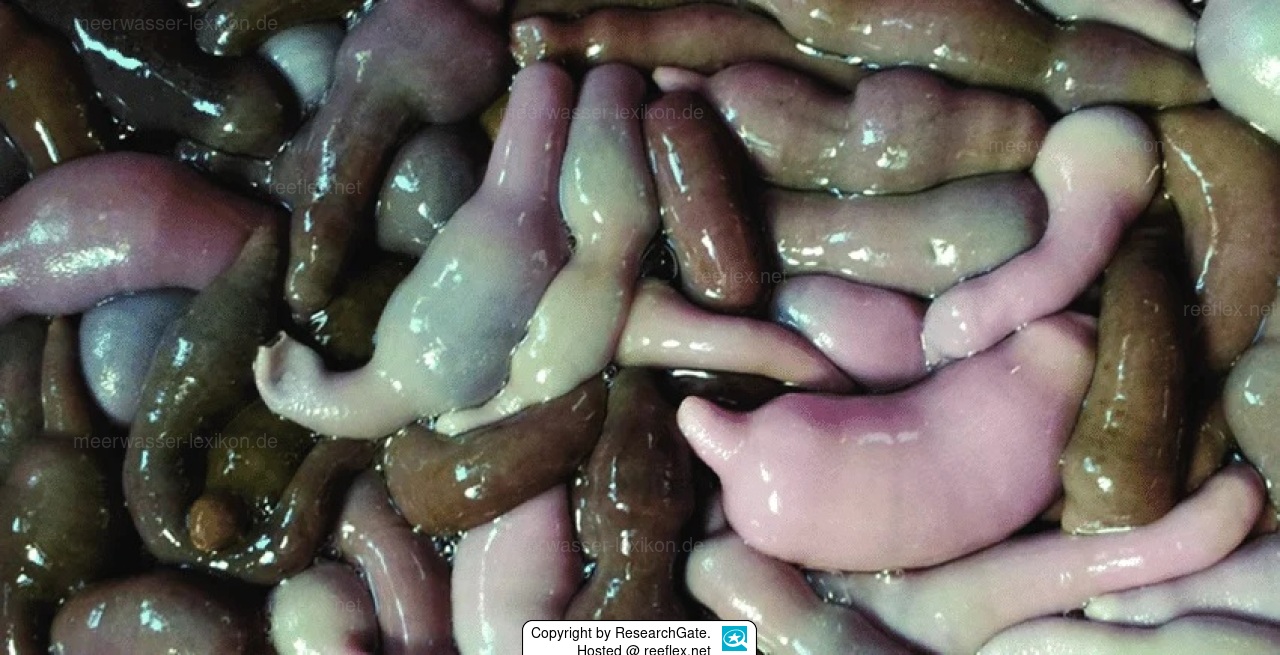
If you'd like to know why this hedgehog worm is also called a “penis fish,” you should click on this link.
The worm looks like a human male's genitals:
https://www.timesnownews.com/the-buzz/article/thousands-of-penis-fish-wash-ashore-on-drakes-beach-in-california/526893
In the ocean, the worm lives in U-shaped burrows in muddy seabeds, into which other creatures can move, and has therefore been given the name “host.”
Urechis unicinctus typically feeds on plankton and other small organic particles, which it captures using “sticky mucus nets.”
The worm is a true master of survival, with fossil evidence of its U-shaped burrows dating back 300 million years. These polychaetes are quite long-lived and can live up to 25 years.”
In 2019, thousands of “penis fish” washed ashore at Drake’s Beach on the coast of California, on the west coast of the United States.Presumably, a storm could have driven the fat “innkeeper” worms from their underwater dwellings and washed them ashore, where the worms are now defenseless against various predators and humans.
Japanese scientists have put forward a new theory after observing actively swimming worms near the beach.
Since trochophore larvae of Urechis unicinctus were also observed in the plankton among the adult worms, they do not rule out the possibility of reproductive swarming behavior (reproduction) as the cause of this event.
Predators: otters, flounders, sharks, rays, seagulls, and humans.
In Asian countries, Urechis unicinctus is considered a true delicacy; people who have tried the worm say it is chewy, salty, and surprisingly sweet.The phallus-shaped marine worms are usually served with a savory sauce made of sesame oil and salt or a spicier dip made of vinegar and gochujang.If you’d like to prepare this marine creature differently, you can grill it with salt, pepper, and sesame oil.
Synonymised names
Echiurus unicinctus Drasche, 1880 · unaccepted (superseded original combination)
Spiroctetor unicinctus (Drasche, 1880) · unaccepted (superseded subsequent combination)
The worm looks like a human male's genitals:
https://www.timesnownews.com/the-buzz/article/thousands-of-penis-fish-wash-ashore-on-drakes-beach-in-california/526893
In the ocean, the worm lives in U-shaped burrows in muddy seabeds, into which other creatures can move, and has therefore been given the name “host.”
Urechis unicinctus typically feeds on plankton and other small organic particles, which it captures using “sticky mucus nets.”
The worm is a true master of survival, with fossil evidence of its U-shaped burrows dating back 300 million years. These polychaetes are quite long-lived and can live up to 25 years.”
In 2019, thousands of “penis fish” washed ashore at Drake’s Beach on the coast of California, on the west coast of the United States.Presumably, a storm could have driven the fat “innkeeper” worms from their underwater dwellings and washed them ashore, where the worms are now defenseless against various predators and humans.
Japanese scientists have put forward a new theory after observing actively swimming worms near the beach.
Since trochophore larvae of Urechis unicinctus were also observed in the plankton among the adult worms, they do not rule out the possibility of reproductive swarming behavior (reproduction) as the cause of this event.
Predators: otters, flounders, sharks, rays, seagulls, and humans.
In Asian countries, Urechis unicinctus is considered a true delicacy; people who have tried the worm say it is chewy, salty, and surprisingly sweet.The phallus-shaped marine worms are usually served with a savory sauce made of sesame oil and salt or a spicier dip made of vinegar and gochujang.If you’d like to prepare this marine creature differently, you can grill it with salt, pepper, and sesame oil.
Synonymised names
Echiurus unicinctus Drasche, 1880 · unaccepted (superseded original combination)
Spiroctetor unicinctus (Drasche, 1880) · unaccepted (superseded subsequent combination)

