


 Dr. Antonella Lavorato, Mexiko


Info
We would like to thank Dr. Marzia Bo (Italy) and Dr. Antonella Lavorato (Ecuador) for information and photos.
In stony corals there are three different strategies in terms of nutrition:
- Nutrition by internal zooxanthellae via photosynthesis (zooxanthellate)
- nutrition without internal zooxanthellae by catching plankton (azooxanthellate)
- Combination of azooxanthellate and azooxanthellate nutrition (see https://coraltraits.org/traits/41?value=both).
This three-part nutritional strategy also exists in black corals, which were formerly considered h
- zooxanthellate - > see https://www.ncbi.nlm.nih.gov/pmc/articles/PMC3061131/
- azooxanthellate - > see https://peerj.com/articles/5129.pdf
- Combination of zooxanthellate and azooxanthellate e.g..
Sparse zooxanthellae have been detected in many species, such as Tylopathes crispa, Cirrhipathes anguina, Cirrhipathes contorta, Cirrhipathes spiralis, Stichopathes gracilis, Stichopathes saccula, Stichopathes variabilis, Cirrhipathes ramosa, and ten Hawaiiian species (Wagner et al., 2010) (including Antipathes, Myriopathes, Acanthopathes, Bathypathes), including at great depths. (Dr. Mazia Bo via email).
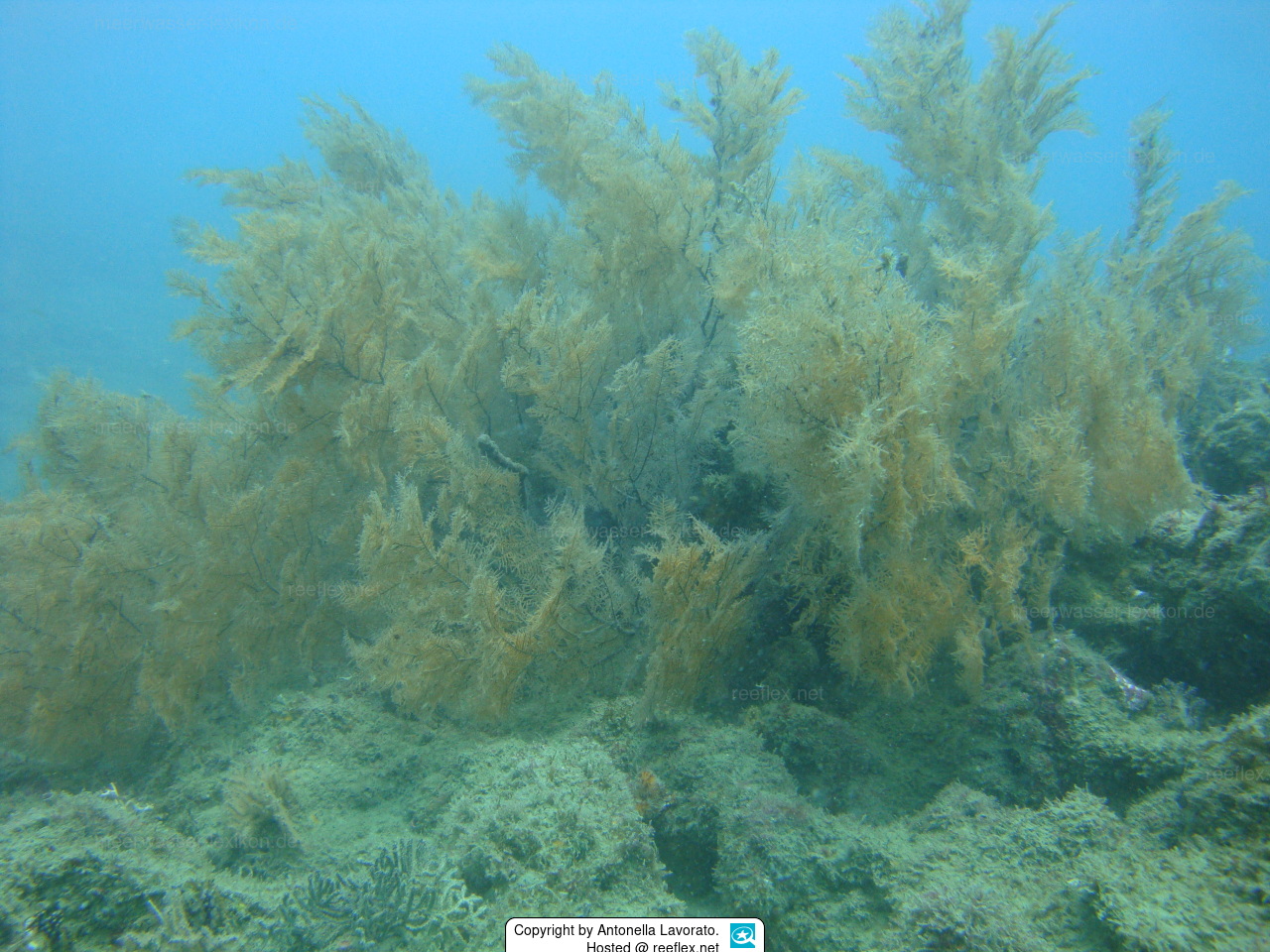
Myriopathes panamensis is an azooxanthellate coral, it forms regular "bushes" whose height can reach 78cm and width 95 cm.
In such living "walls" continuously catches enough plankton for feeding the coral.
On the basis of the photos the water turbidity by plankton is to be recognized well.
http://www.equilibrioazul.org/documentos/october/Bo%20et%20al%202011.%20Black%20corals.pdf
Antipatharians have a great ecological importance as an engineering species and are the main component of "coral forests
Synonym: Antipathes panamensis Verrill, 1869
In stony corals there are three different strategies in terms of nutrition:
- Nutrition by internal zooxanthellae via photosynthesis (zooxanthellate)
- nutrition without internal zooxanthellae by catching plankton (azooxanthellate)
- Combination of azooxanthellate and azooxanthellate nutrition (see https://coraltraits.org/traits/41?value=both).
This three-part nutritional strategy also exists in black corals, which were formerly considered h
- zooxanthellate - > see https://www.ncbi.nlm.nih.gov/pmc/articles/PMC3061131/
- azooxanthellate - > see https://peerj.com/articles/5129.pdf
- Combination of zooxanthellate and azooxanthellate e.g..
Sparse zooxanthellae have been detected in many species, such as Tylopathes crispa, Cirrhipathes anguina, Cirrhipathes contorta, Cirrhipathes spiralis, Stichopathes gracilis, Stichopathes saccula, Stichopathes variabilis, Cirrhipathes ramosa, and ten Hawaiiian species (Wagner et al., 2010) (including Antipathes, Myriopathes, Acanthopathes, Bathypathes), including at great depths. (Dr. Mazia Bo via email).
Myriopathes panamensis is an azooxanthellate coral, it forms regular "bushes" whose height can reach 78cm and width 95 cm.
In such living "walls" continuously catches enough plankton for feeding the coral.
On the basis of the photos the water turbidity by plankton is to be recognized well.
http://www.equilibrioazul.org/documentos/october/Bo%20et%20al%202011.%20Black%20corals.pdf
Antipatharians have a great ecological importance as an engineering species and are the main component of "coral forests
Synonym: Antipathes panamensis Verrill, 1869


