Anzeige
Fauna Marin GmbH Tunze BAS Kölle Zoo Aquaristik ICP

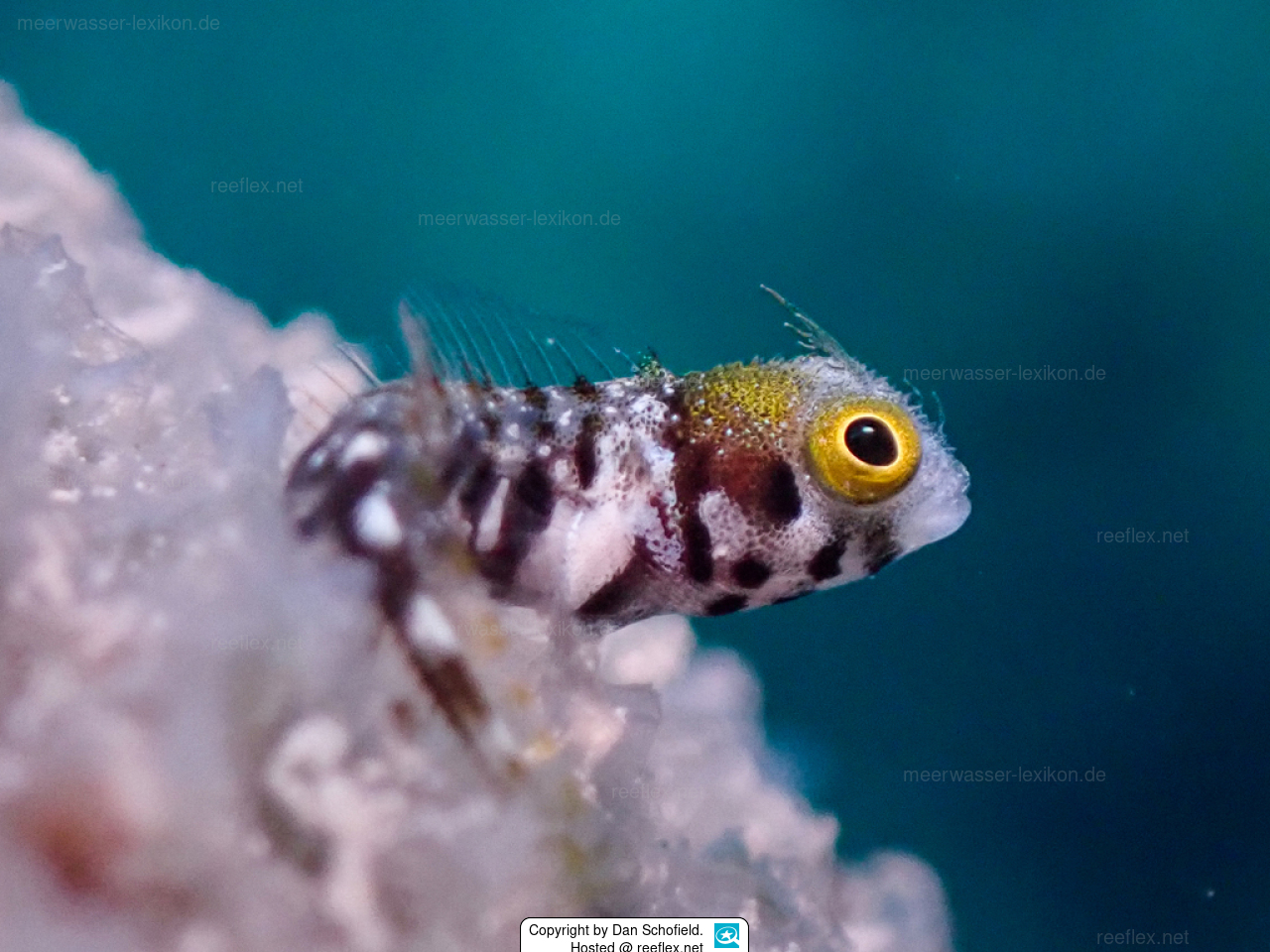
Acanthemblemaria spinosa Spinyhead blenny

Acanthemblemaria spinosa is commonly referred to as Spinyhead blenny. Difficulty in the aquarium: There are no reports available yet that this animal has already been kept in captivity successfully. A aquarium size of at least 150 Liter is recommended. Toxicity: Toxic hazard unknown.


Profilbild Urheber Dan Schofield, UK

Acanthemblemaria spinosa, West Bay, Cayman Islands 2026 (CC BY)


Courtesy of the author Dan Schofield, UK . Please visit www.inaturalist.org for more information.

Uploaded by Muelly.

Image detail


Profile

lexID:
2002 
AphiaID:
254883 
Scientific:
Acanthemblemaria spinosa 
German:
Hechtschleimfisch 
English:
Spinyhead Blenny 
Category:
Щука собачка 
Family tree:
Animalia (Kingdom) > Chordata (Phylum) > Actinopterygii (Class) > Perciformes (Order) > Chaenopsidae (Family) > Acanthemblemaria (Genus) > spinosa (Species) 
Initial determination:
Metzelaar, 1919 
Occurrence:
Guadeloupe, Barbados, Anguilla, Antigua and Barbuda, Aruba, Belize, British Virgin Islands, Central Atlantic, Cuba, Curacao, Dominica, Dominican Republic, Florida, Grenada, Haiti, Honduras, Jamaica, Martinique, Montserrat, Puerto Rico, Saint Kitts and Nevis, Saint Lucia, Saint Vincent and the Grenadines, The Bahamas, the Caribbean, the Cayman Islands, the Netherlands Antilles, Trinidad and Tobago, Turks and Caicos Islands, USA, Venezuela, Virgin Islands, U.S. 
Marine Zone:
Intertidal (Eulittoral), intertidal zone between the high and low tide lines characterized by the alternation of low and high tide down to 15 meters 
Sea depth:
1 - 12 Meter 
Habitats:
associated with with coral skeletons, Patch Reefs, Sandy sea floors, Seawater, Sea water 
Size:
0.79" - 1.18" (2cm - 3,1cm) 
Temperature:
°F - 82.4 °F (°C - 28°C) 
Food:
Carnivore, Copepods 
Tank:
33 gal (~ 150L)  
Difficulty:
There are no reports available yet that this animal has already been kept in captivity successfully 
Offspring:
Not available as offspring 
Toxicity:
Toxic hazard unknown 
CITES:
Not evaluated 
Red List:
Least concern (LC)  
Related species at
Catalog of Life
:
 
Author:
Publisher:
Meerwasser-Lexikon.de
Created:
Last edit:
2026-02-21 13:20:45 

Info

Acanthemblemaria spinosa Metzelaar, 1919

Inhabits small patch reefs surrounded by white sand. Observed primarily on dead surfaces of elkhorn coral

Synonymised names:
Acanthemblemaria variegata Beebe & Tee-Van, 1928 · unaccepted

Jumping guard
A jumping guard prevents (nocturnal) fish from jumping out.
Wrasses, blennies, hawkfishs and gobies jump out of an unprotected tank in fright if their night rest is disturbed, unfortunately these jumpers are found dried up in the morning on carpets, glass edges or later behind the tank.

https://www.korallenriff.de/en/article/1925_5_Jump_Protection_Solutions_for_Fish_in_the_Aquarium__5_Net_Covers.html

A small night light also helps, as it provides the fish with a means of orientation in the dark!

External links

  1. FishBase (en). Abgerufen am 07.08.2020.
  2. RLS Reef Life Survey (en). Abgerufen am 20.01.2023.

Pictures

Commonly


Husbandry know-how of owners

am 03.09.09#2
Hatte ihn vom Händler dazu geschenkt bekommen, kann auch bestätigen das er zum Körperverhälntniss extrem große Brocken fressen kann.

Er hat so ziemlich alle kleinen Höhlen/Röhren im Nano für sich beansprucht, und ist immer zu sehen.

Streit mit anderen Nanobewohnern (Grundeln) gibt es nicht.

Ich halte ihn in 70l.

150l. find ich zuviel da er wirklich winzig ist.
am 12.04.07#1
Sehr gefrässig, brauch mindestens 2-mal täglich Futter, sonst verhungert er. Können extrem große Brocken fressen, u.a auch kleiner Artgenossen.
Sehr seßhaft.
2 husbandary tips from our users available
Show all and discuss

Что это такое?

The following is an overview of "what's that?" Entries that have been successfully determined and assigned to this entry. A look at the entertainments there is certainly interesting.